
Clinic Timings
Monday To Saturday
Morning-10:00 AM - 01:30 PM
Evening-05:00 PM - 08:30 PM
Sunday
10:00 AM - 01:30 PM




What Is Bruxism: Causes, Symptoms and Treatment Options
Teeth grinding, medically known as bruxism, is a common yet often overlooked condition. Many people experience bruxism when they grind or clench their teeth, especially when it occurs during sleep. Over time, untreated bruxism can lead to serious dental problems, jaw disorders, and even chronic pain.
At Dental Folks in Ramesh Nagar, we regularly see patients whose bruxism goes unnoticed until a routine dental check-up reveals worn or damaged teeth — early diagnosis makes treatment much simpler.
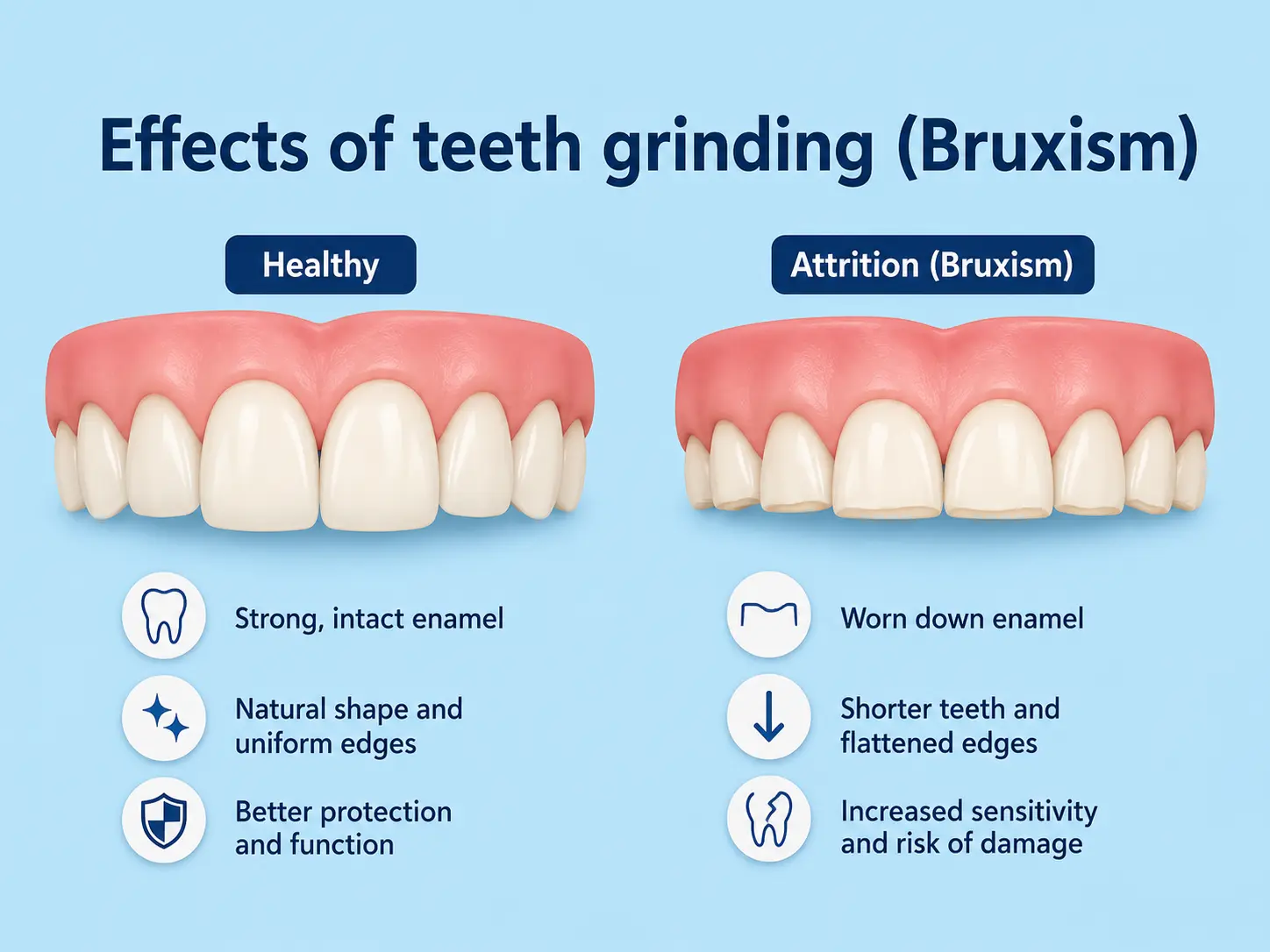
Table of Contents
What Is Bruxism?
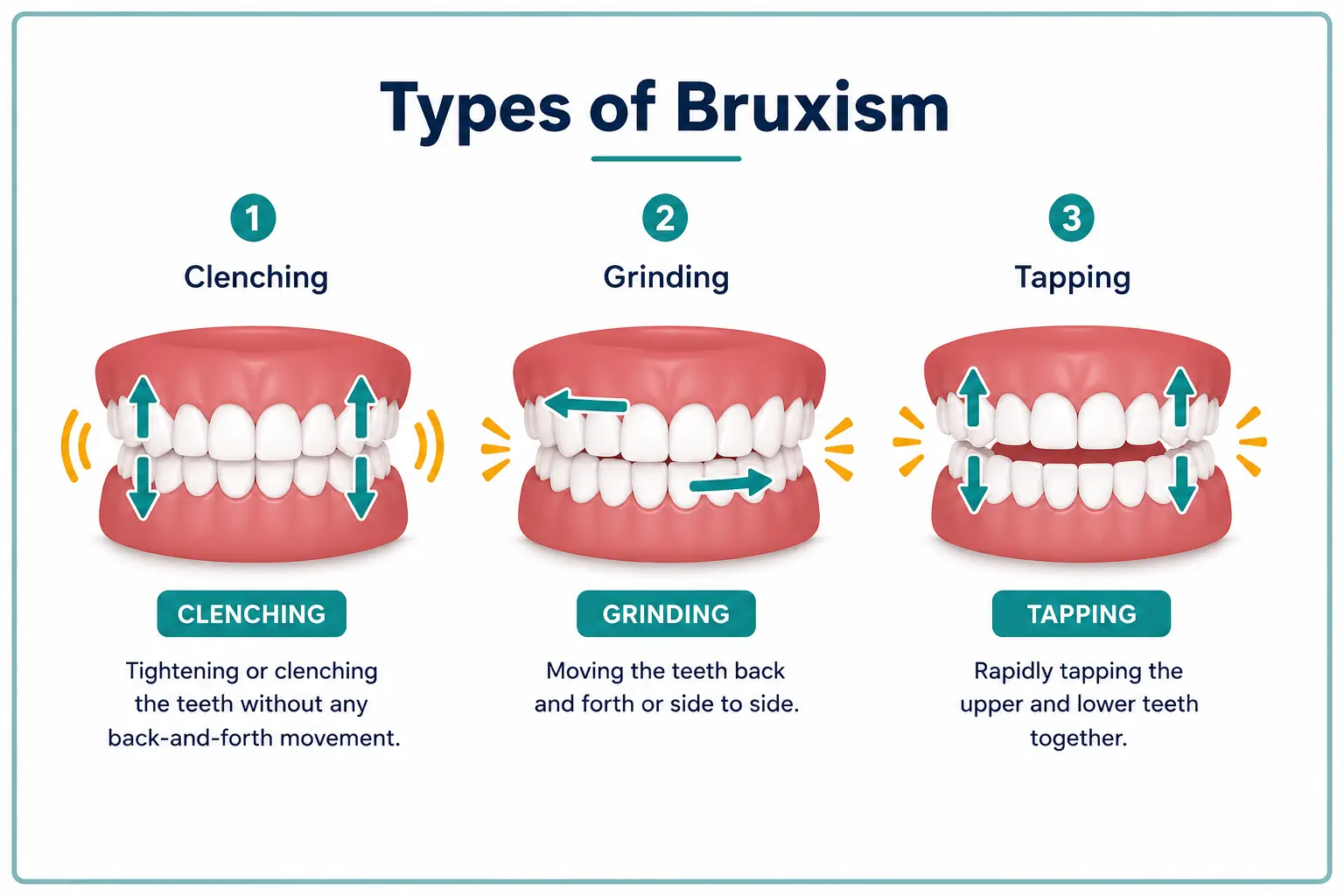
Bruxism refers to the involuntary grinding, gnashing, or clenching of teeth. It typically occurs in two forms:
- Awake bruxism: happens during the day, often linked to stress or concentration.
- Sleep bruxism: occurs at night and is considered a sleep-related movement disorder, sometimes associated with conditions like sleep apnea.
While occasional teeth grinding may not be harmful, frequent or severe bruxism can damage teeth and strain the jaw muscles.
Causes of Bruxism
Bruxism does not have a single cause; instead, it is usually the result of a combination of physical, psychological and lifestyle factors.
1. Stress and Anxiety
One of the most common triggers of bruxism is emotional stress. People dealing with tension, frustration or anxiety are more likely to clench or grind their teeth unconsciously.
2. Sleep Disorders
Sleep bruxism is often linked with other sleep-related issues. Conditions such as insomnia or sleep apnea can increase the likelihood of nighttime grinding. Disrupted sleep patterns may activate the jaw muscles involuntarily.
3. Misaligned Teeth or Bite Issues
Dental problems like crooked teeth or an abnormal bite can lead to bruxism. When the upper and lower teeth do not align properly, the jaw may compensate by grinding.
4. Lifestyle Factors
Certain habits and substances can increase the risk of bruxism:
- Excessive caffeine consumption
- Alcohol use
- Smoking or tobacco use
5. Medications and Medical Conditions
Some medications, particularly antidepressants, may have side effects that include teeth grinding. Neurological conditions like Parkinson's disease may also be associated with bruxism.
6. Personality Traits
Individuals with aggressive, competitive, or hyperactive personalities are more prone to bruxism. These traits often correlate with higher stress levels and muscle tension.
Notice worn or sensitive teeth? It could be bruxism — get checked at Dental Folks, Ramesh Nagar.
Call Now WhatsAppSymptoms of Bruxism
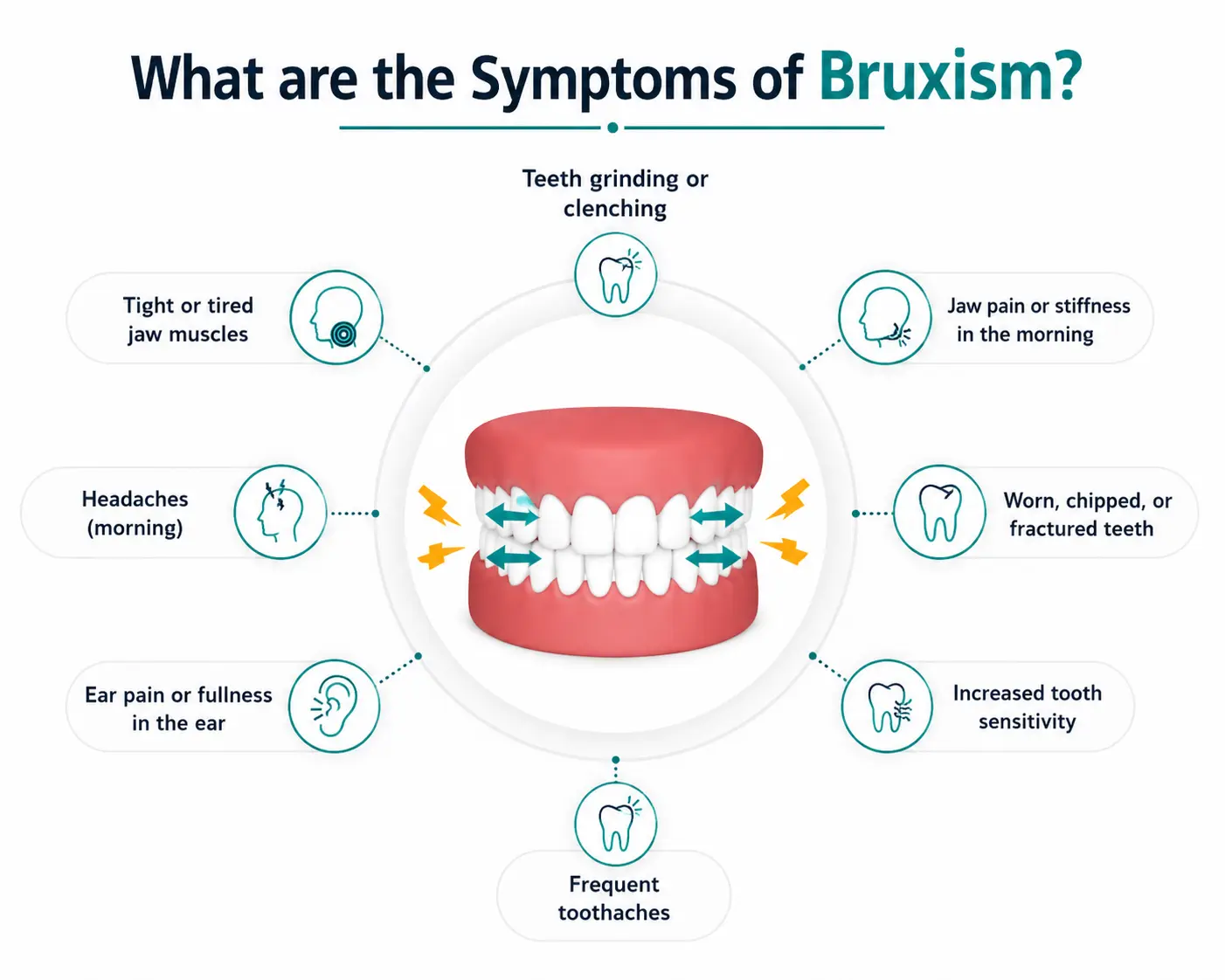
Bruxism can be difficult to detect, especially if it occurs during sleep. However, several signs and symptoms may indicate its presence:
1. Teeth Damage
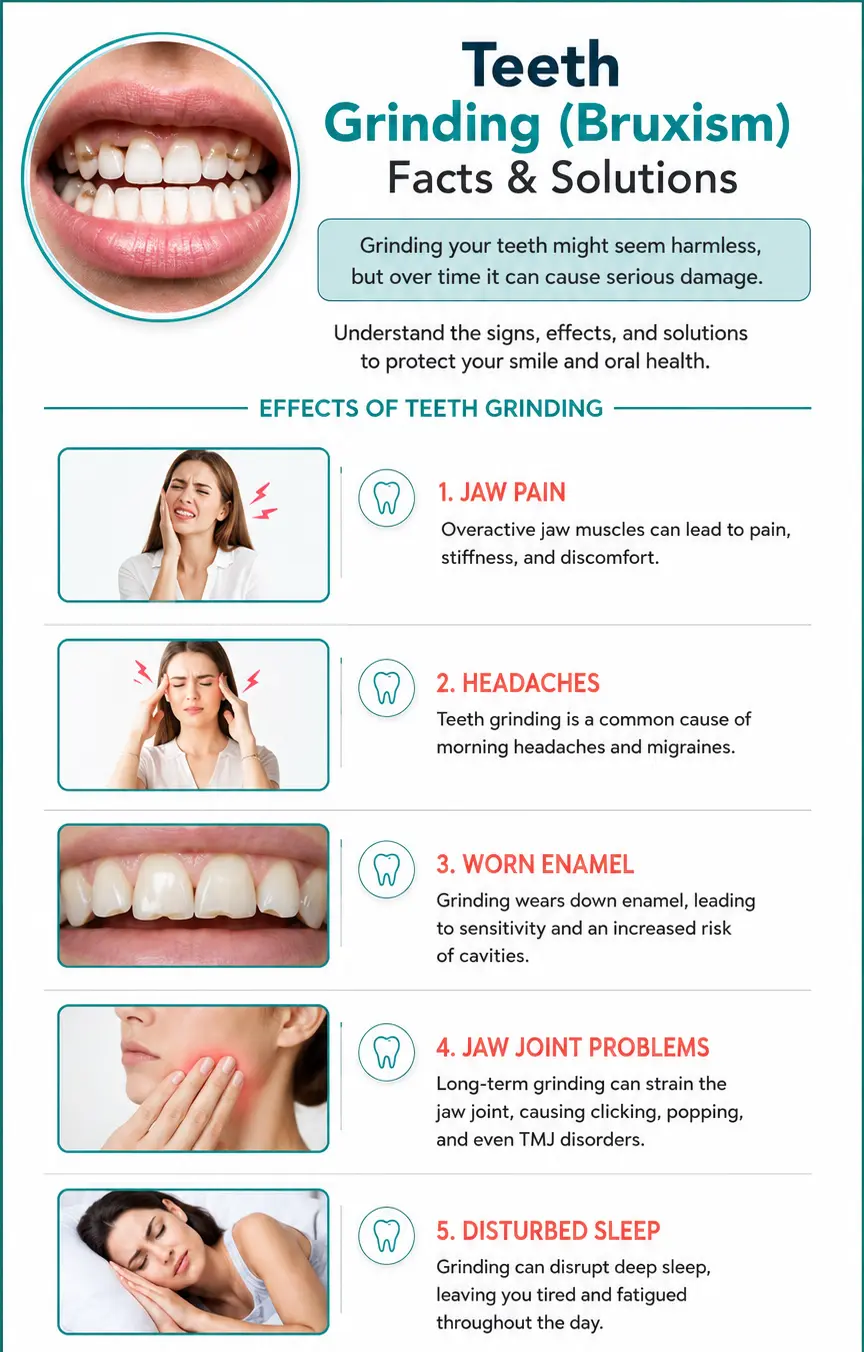
- Flattened, chipped or fractured teeth.
- Increased tooth sensitivity.
- Worn enamel exposing deeper layers.
2. Jaw Pain and Tightness
Persistent jaw discomfort or stiffness is a common symptom. In severe cases, it can lead to temporomandibular joint disorder (TMJ), affecting jaw movement.
3. Headaches
Frequent dull headaches, particularly in the temples, are often associated with bruxism. These headaches are usually worse in the morning.
4. Ear Pain
Although not caused by ear infections, the pain from bruxism may radiate to the ear area due to the proximity of jaw muscles.
5. Sleep Disruption
Sleep bruxism can disturb both the affected individuals and their partner. Grinding noises at night are often reported by others.
6. Facial Pain and Fatigue
Continuous muscle activity during grinding can lead to facial soreness and fatigue, especially upon waking.
Treatment Options
The treatment of bruxism depends on its cause, severity and impact. A combination of dental care, lifestyle changes, and medical intervention is often the most effective approach.
A. Mouthguards and Splints
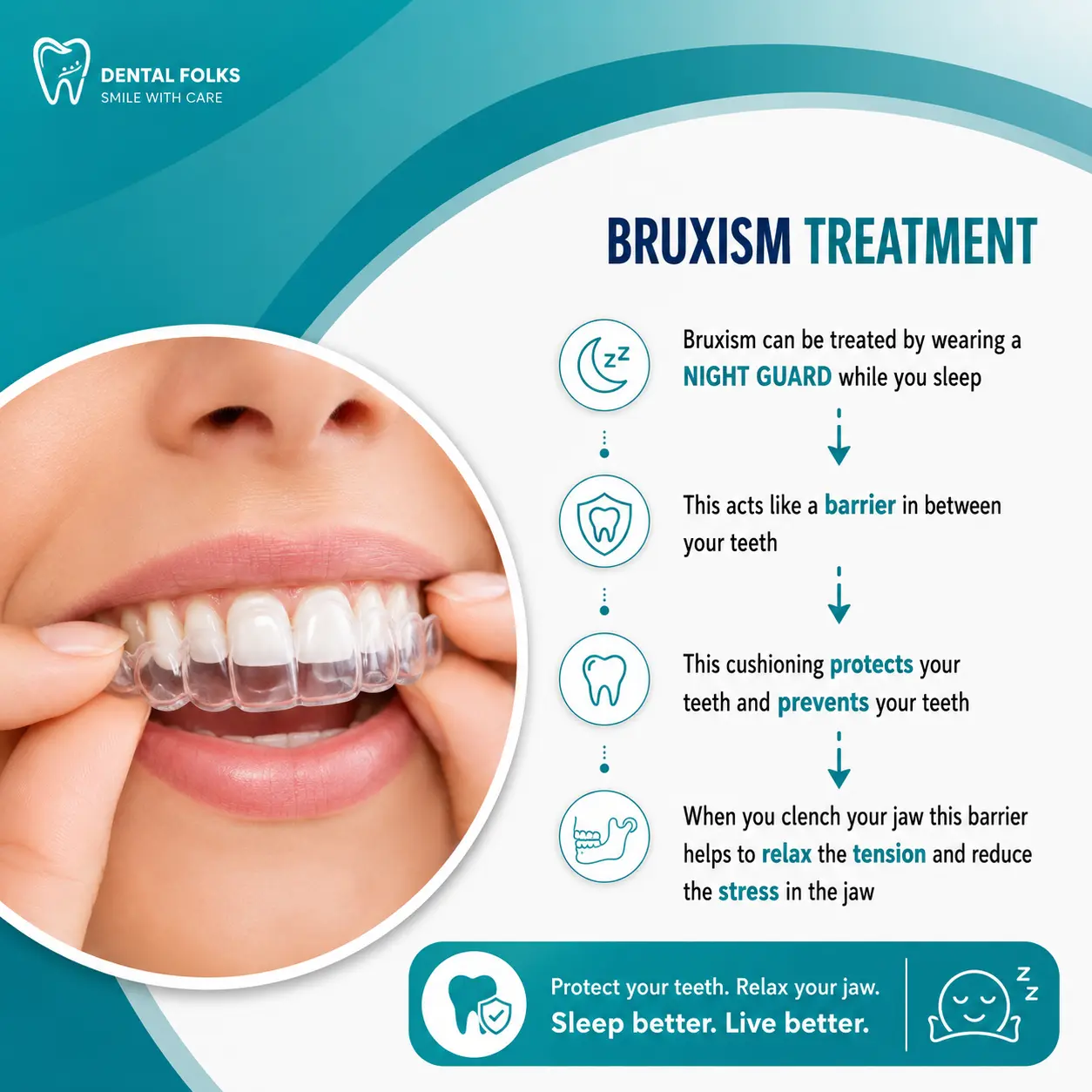
Custom-made mouthguards, also known as night guards, are one of the most common treatments. They create a protective barrier between the upper and lower teeth, preventing damage during grinding.
B. Stress Management
Since stress is a major trigger, managing it can significantly reduce bruxism. Effective techniques include:
- Meditation and mindfulness
- Yoga and breathing exercises
- Regular physical activity
Counseling or therapy may also help individuals cope with underlying anxiety.
C. Behavioral Therapy
Awareness techniques can help reduce awake bruxism. Patients are trained to recognize when they are clenching their teeth and consciously relax their jaw muscles.
D. Dental Correction
If misaligned teeth or bite issues are contributing factors, orthodontic treatments or dental adjustments may be recommended. This can help reduce the strain on the jaw.
E. Medications
In some cases, doctors may prescribe medications such as muscle relaxants or anti-anxiety drugs. However, these are usually short-term solutions.
F. Lifestyle Changes
- Reduce caffeine and alcohol intake.
- Avoid chewing gum or hard foods.
- Maintain a consistent sleep schedule.
G. Treating Underlying Conditions
If bruxism is linked to sleep disorders like sleep apnea, addressing the primary condition can help alleviate symptoms. Persistent jaw pain related to bruxism can also be evaluated as part of our jaw pain therapy options.
Prevention Tips
- Practice good sleep hygiene.
- Stay hydrated.
- Avoid stimulating activities before bedtime.
- Use relaxation techniques before sleeping.
Frequently Asked Questions
Can bruxism damage my teeth permanently?
Yes, if left untreated for a long time, bruxism can wear down enamel, chip or fracture teeth, and in severe cases lead to tooth loss. Early diagnosis and a night guard can help prevent lasting damage.
Can children get bruxism?
Yes, bruxism is fairly common in children, especially during teething or as baby teeth are replaced by permanent ones. It often resolves on its own, but a dentist should still monitor it.
How is bruxism diagnosed?
A dentist can often identify bruxism during a routine check-up by looking for worn or flattened teeth, jaw tenderness, and other visible signs. In some cases, a sleep study may be recommended.
Can bruxism go away on its own?
Mild, occasional bruxism may improve without treatment, especially if linked to temporary stress. However, frequent or severe grinding usually needs a dental night guard or other treatment to prevent damage.
Think You Might Be Grinding Your Teeth?
If you're waking up with jaw pain, headaches, or worn teeth, it could be bruxism. Visit Dental Folks in Ramesh Nagar, West Delhi for a check-up and a custom night guard fitting.
Call Now Book Your Appointment Today