
Clinic Timings
Monday To Saturday
Morning-10:00 AM - 01:30 PM
Evening-05:00 PM - 08:30 PM
Sunday
10:00 AM - 01:30 PM




Types of Dental Crowns and Their Indications
A dental crown is a custom-made, cap-like restoration that completely covers a tooth above the gum line to restore its shape, size, strength and appearance. Choosing the right type of crown depends on where the tooth sits in the mouth, how much natural tooth remains and your aesthetic needs. This guide explains the main types of dental crowns and the situations each one is best suited for.
Table of Contents
What Is a Dental Crown?
A dental crown is a cap-shaped restoration that fully encases a damaged or weakened tooth above the gum line. It is one of the most common restorations used in both restorative and cosmetic dentistry, restoring the tooth's natural form while protecting what remains underneath.
The main purposes of a dental crown are to:
- Protect a weak or cracked tooth from further damage
- Restore the shape, size and function of a broken-down tooth
- Improve the appearance of discoloured or misshapen teeth
- Strengthen and seal a tooth after root canal treatment
- Support a dental bridge or cover a dental implant
Types of Dental Crowns
There are several types of dental crowns, each made from different materials with their own strengths, ideal uses and trade-offs. Here are the most common ones.
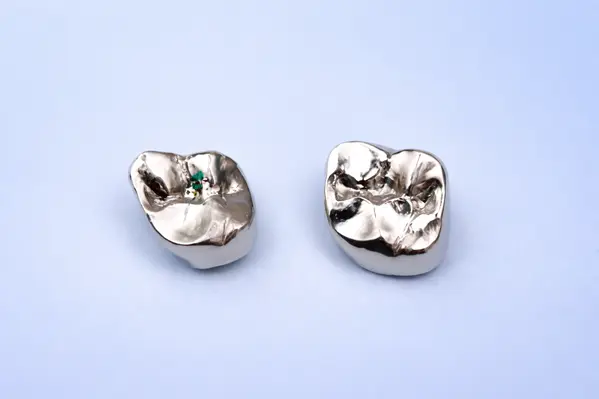
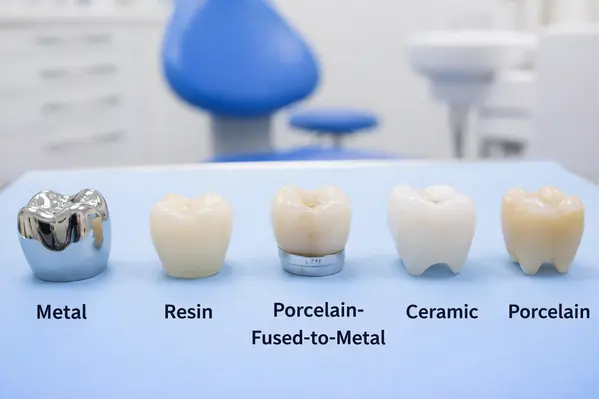
1. Metal Crowns
Metal crowns are made from alloys such as gold, palladium, nickel or chromium. They are extremely durable and highly resistant to wear, which makes them a reliable choice for back teeth.
Advantages
- Extremely strong and long-lasting
- Require minimal removal of natural tooth structure
- Ideal for patients who grind their teeth
- Rarely chip or break; easy to maintain
- Biocompatible (noble metals)
Indications
- Posterior teeth (molars) where strength matters more than appearance
- Patients with heavy biting forces
- Teeth that need long-term durability with minimal maintenance
Limitations
- Metallic colour is not ideal for visible front teeth
- Metal conducts heat and cold, which may cause temporary sensitivity
- The hard surface can wear down opposing natural teeth
- May interfere with some MRI scans or security scanners
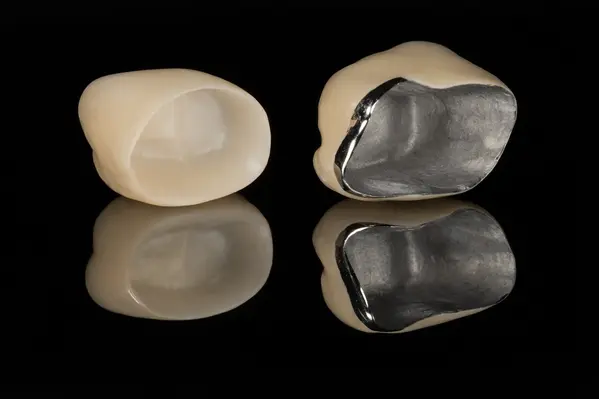
2. Porcelain-Fused-to-Metal (PFM) Crowns
PFM crowns have a strong metal core covered with a tooth-coloured porcelain layer, combining the durability of metal with a more natural appearance.
Advantages
- Combines the strength of metal with the aesthetics of porcelain
- Can be shade-matched to surrounding teeth
- Suitable for both front and back teeth
- Shields weak or root-canal-treated teeth from further damage
Indications
- Both anterior and posterior teeth
- Teeth requiring strength with moderate aesthetics
- Bridge abutments
- Root canal treated teeth
Disadvantages
- Porcelain can chip over time
- A dark metal margin may show near the gum line as gums recede
- Less translucent than all-ceramic crowns
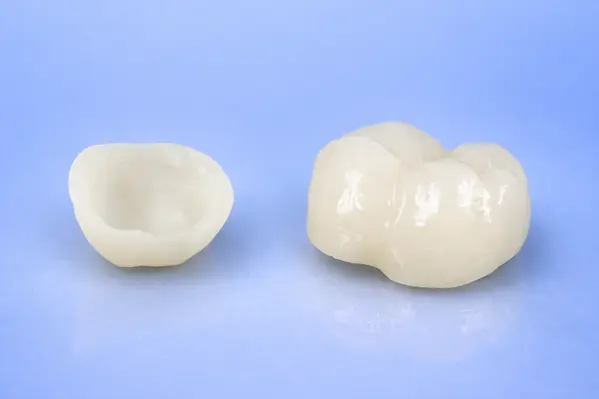
3. All-Ceramic / All-Porcelain Crowns
All-ceramic crowns are metal-free and offer superior aesthetics, closely matching the translucency and colour of natural teeth. They are an excellent option for patients with metal allergies.
Advantages
- Excellent, natural-looking aesthetics
- No dark metal margins
- Biocompatible and completely metal-free
Indications
- Anterior (front) teeth
- Patients with high aesthetic demands
- Metal-sensitive individuals
Disadvantages
- Can be less fracture-resistant than metal in some cases
- Require precise preparation and bonding
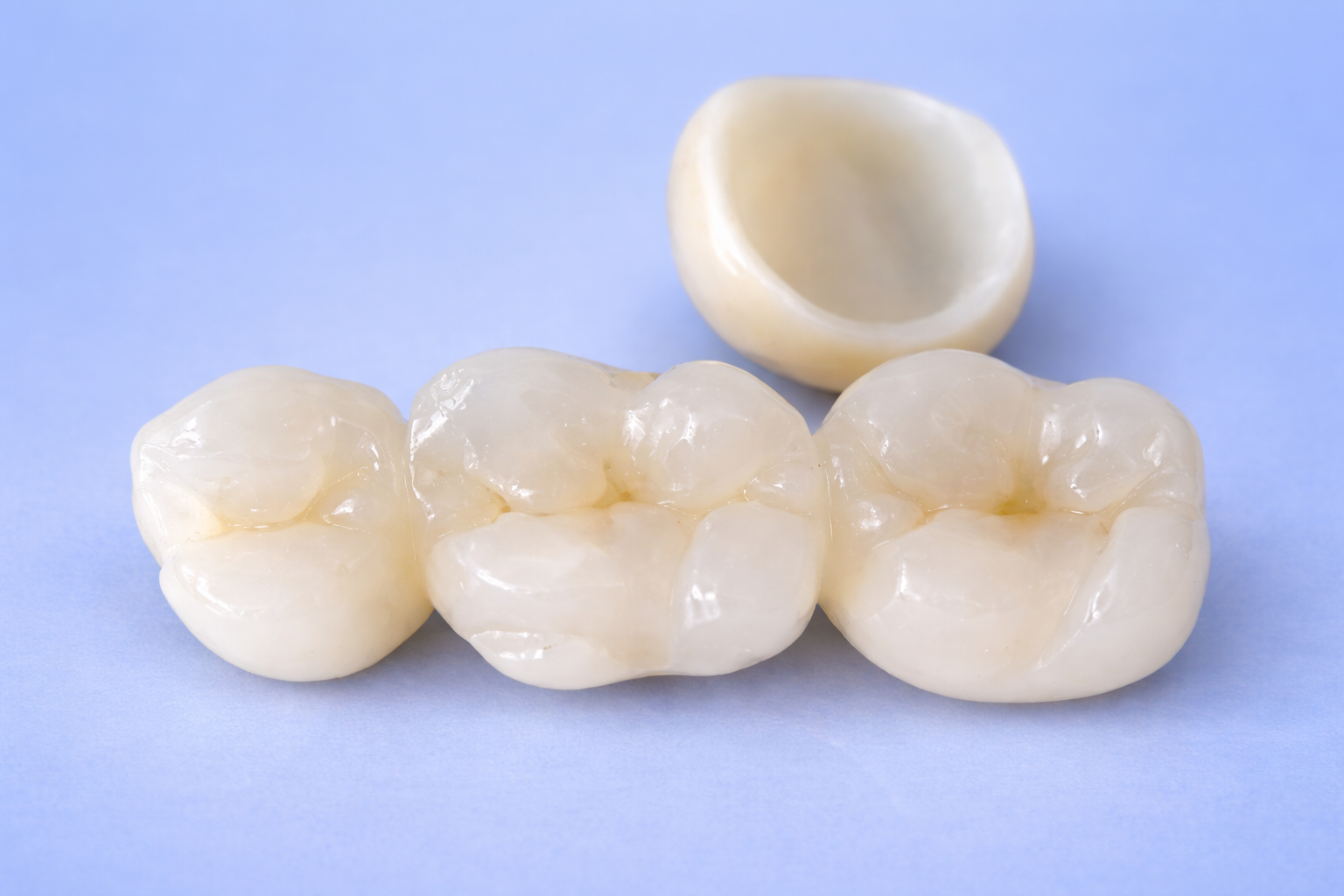
4. Zirconia Crowns
Zirconia crowns are among the strongest ceramic crowns available. They combine high fracture resistance with improved aesthetics, especially in newer translucent zirconia formulations.
Advantages
- Extremely strong and durable
- Completely metal-free
- Gentle on opposing teeth
- Resist food staining
- Require less removal of natural tooth structure
Indications
- Posterior teeth requiring high strength
- Patients with bruxism (teeth grinding)
- Implant-supported crowns
- Cases needing durability with reasonable aesthetics
Disadvantages
- Slightly less translucent than porcelain
- Shade matching can be challenging for front teeth
5. Resin Crowns (Temporary Crowns)
Resin crowns are more affordable and are typically used as temporary or short-term restorations. They are quick and easy to fabricate but are less durable than other crown types.
Advantages
- Cost-effective
- Quick to fabricate
Indications
- Temporary crowns
- Paediatric (children's) dentistry
- Short-term restorative needs
Disadvantages
- Prone to wear and fracture
- Short lifespan
- Limited long-term aesthetic stability
Not sure which crown is right for your tooth? Our specialists will guide you to the best option.
Call Now WhatsAppCommon Reasons for a Dental Crown
A dentist may recommend a crown in several situations, including:
- Extensive tooth decay that a filling cannot restore
- Fractured or cracked teeth
- Protecting a tooth after root canal treatment
- Worn-down teeth from grinding (attrition) or erosion
- Cosmetic correction of tooth shape or colour
- Supporting a dental bridge
- Covering a dental implant
Choosing the Right Crown
There is no single "best" crown - the right choice depends on several factors your dentist will assess during your consultation for crowns & bridges:
- Location of the tooth (front vs back)
- Aesthetic requirements
- Amount of natural tooth structure remaining
- Biting and chewing (occlusal) forces
- Oral habits such as teeth grinding
- Budget and cost considerations
Frequently Asked Questions
How long do dental crowns last?
With good oral care, most dental crowns last 10 to 15 years or longer. Metal and zirconia crowns are among the most durable, while resin crowns are meant for short-term use.
Which type of dental crown is best?
There is no single best crown. The right choice depends on the tooth's location, biting forces and aesthetic needs. Zirconia and PFM crowns suit back teeth, while all-ceramic crowns are preferred for front teeth.
Is getting a dental crown painful?
No. The procedure is carried out under local anaesthesia and is generally painless. Mild sensitivity for a few days afterward is normal and settles on its own.
How should I care for a dental crown?
Brush twice a day, floss daily, avoid biting very hard objects, and keep regular dental check-ups so your dentist can monitor the crown and surrounding tooth.
Do dental crowns look natural?
Yes. All-ceramic, zirconia and PFM crowns can be shade-matched to your natural teeth, giving a natural appearance that blends with your smile.
Get the Right Crown for Your Smile
If you have a decayed, cracked or root-canal-treated tooth, the right dental crown can protect it for years to come. Visit Dental Folks, a trusted dental clinic in Ramesh Nagar, West Delhi, for expert advice tailored to your teeth.
Book Your Appointment Today