
Clinic Timings
Monday To Saturday
Morning-10:00 AM - 01:30 PM
Evening-05:00 PM - 08:30 PM
Sunday
10:00 AM - 01:30 PM





Tooth Fracture: Types, Causes and Treatment Options
A fractured tooth can range from a minor cosmetic concern to a serious dental emergency, depending on the depth and severity of the damage. Knowing the type of fracture, what causes it and how it is treated helps you act early and protect your tooth.
Table of Contents
What Is a Tooth Fracture?
A tooth fracture refers to a crack, chip or break in the structure of a tooth. Teeth are made up of multiple layers - the enamel (outer layer), dentin (middle layer) and pulp (inner layer). Where the fracture reaches within these layers largely decides how serious it is and how it needs to be treated.
Types of Tooth Fracture
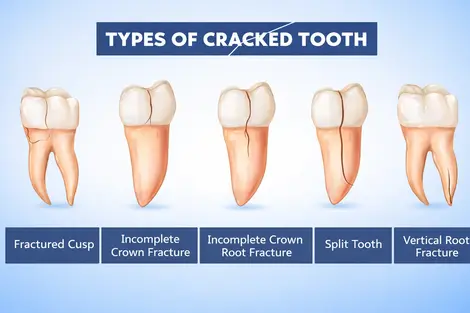
1. Craze Lines
Craze lines are tiny, superficial cracks that affect only the enamel. They are very common in adults and usually develop from normal wear and tear over time. These cracks are typically painless and do not require treatment.
2. Chipped Tooth
A chipped tooth involves a small piece of enamel breaking off, often due to trauma or biting on hard objects.
3. Cracked Tooth
A cracked tooth has a fracture line that extends from the chewing surface toward the root. The tooth is still in one piece, but the crack can worsen over time. Symptoms may include pain when chewing or sensitivity to hot and cold.
4. Split Tooth
A split tooth occurs when a crack progresses and separates the tooth into distinct segments. This type of fracture is usually the result of an untreated cracked tooth.
5. Vertical Root Fracture
Vertical root fractures start in the root and extend upward toward the chewing surface. These fractures often go unnoticed until infection or gum swelling develops.
6. Fractured Cusp
A fractured cusp typically affects the pointed part of a chewing tooth. While it can be painful when biting, it is one of the less severe types of fracture.
Causes of Tooth Fracture
Several factors can contribute to tooth fractures, including:
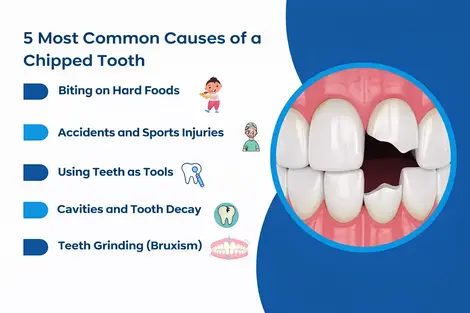
- Biting hard objects such as ice, hard candy or pens
- Dental trauma from accidents, sports injuries or falls
- Teeth grinding (bruxism), which places excessive pressure on teeth
- Untreated cavities that weaken teeth, making fractures more likely even during normal chewing
- Large or old dental fillings that weaken the tooth structure
- Sudden temperature changes, such as drinking hot beverages after cold foods
- Poor oral hygiene, leading to decay that weakens teeth
- Age-related wear, as enamel becomes thinner over time
Symptoms of a Tooth Fracture
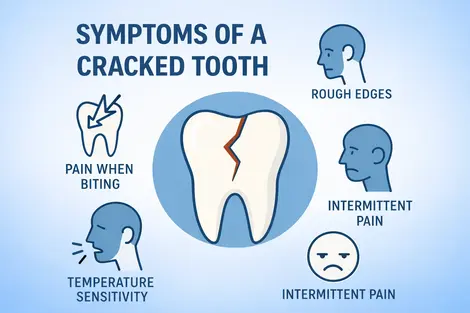
- Pain when chewing or biting
- Sensitivity to hot, cold or sweet foods
- Intermittent tooth pain that comes and goes, making the source hard to pinpoint
- A constant, dull ache in the tooth
- Swelling of the gums around the affected tooth
- Sharp edges that irritate the tongue or cheek
- A small bump or pimple (fistula) on the gum, which can appear if the crack leads to an abscess
- Persistent bad breath, which can be a sign of infection
Think you have a cracked or fractured tooth? Get it checked early to avoid bigger problems.
Call Now WhatsAppTreatment Options for a Tooth Fracture
The right treatment depends on the type and severity of the fracture.
Dental Bonding or Fillings
For minor chips or cracks, tooth-coloured resin can restore the tooth's shape and appearance. Best for: craze lines and small chips.
Dental Crowns
Crowns are commonly used for cracked teeth, fractured cusps or weakened teeth. They cover and protect the remaining tooth structure, restoring strength and function. Best for: cracked teeth and fractured cusps. Learn more about crowns & bridges.
Root Canal Treatment
If the fracture extends into the pulp (inner layer), a root canal treatment may be needed to remove the infected tissue and relieve pain. Best for: deep cracks involving the pulp.
Tooth Extraction
Severely fractured or split teeth that cannot be saved may need to be extracted. Replacement options include dental implants, bridges or partial dentures.
Surgical Treatments
Vertical root fractures may require procedures such as root resection or amputation, hemisection, intentional replantation with repair, or laser therapy.
Onlays and Veneers
In some cases, custom restorations such as onlays or veneers may be used for structural or cosmetic repair.
Preventing Tooth Fracture
- Avoid chewing hard objects
- Wear a mouthguard during sports
- Use a night guard if you grind your teeth
- Treat cavities and dental issues early
- Limit sugar and acidic foods
- Stay hydrated
- Eat a nutrient-rich diet
- Practice good oral hygiene to keep teeth strong
- Maintain regular dental check-ups
Frequently Asked Questions
Can a cracked tooth heal on its own?
No. Unlike bone, a tooth cannot repair a crack by itself. Early treatment helps prevent the crack from worsening and can save the tooth.
Is a tooth fracture a dental emergency?
It can be. Minor craze lines are usually harmless, but a painful, split or bleeding tooth should be seen by a dentist as soon as possible.
How is a fractured tooth treated?
Treatment depends on severity and can include dental bonding, a crown, root canal treatment, or extraction with a replacement for teeth that cannot be saved.
Does a fractured tooth always need a root canal?
No. A root canal is only needed when the fracture reaches the pulp. Minor chips and cracks are often treated with bonding or a crown.
How can I prevent tooth fractures?
Avoid biting hard objects, wear a mouthguard during sports, use a night guard if you grind your teeth, treat cavities early, and keep regular dental check-ups.
Have a Cracked or Fractured Tooth?
Early treatment can save a fractured tooth and prevent pain or infection. Visit Dental Folks, a trusted dental clinic in Ramesh Nagar, West Delhi, for an assessment and the right treatment for your tooth.
Book Your Appointment Today