
Clinic Timings
Monday To Saturday
Morning-10:00 AM - 01:30 PM
Evening-05:00 PM - 08:30 PM
Sunday
10:00 AM - 01:30 PM





Root Canal Treatment: Myths and Facts
Root canal treatment is one of the most misunderstood dental procedures. It is used to save a tooth that is severely decayed, infected or damaged - yet fear and misinformation stop many people from getting it done in time. Let's separate the common myths from the facts.
Table of Contents
What Is a Root Canal?
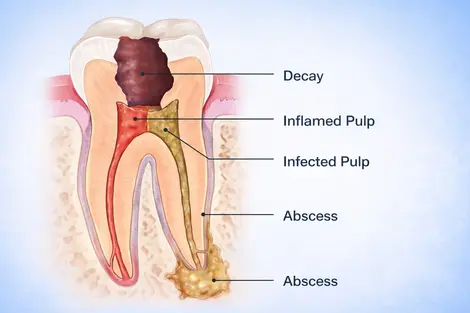
Inside every tooth is a soft tissue called the pulp, which contains nerves and blood vessels. When this pulp becomes infected due to deep cavities, cracks or trauma, it can cause intense pain and swelling.
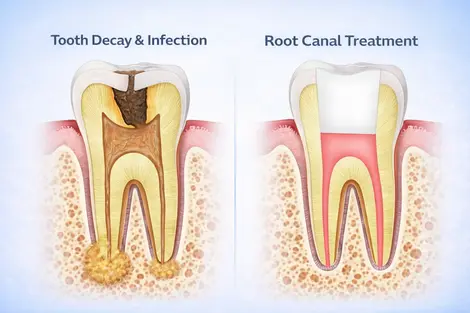
During a root canal treatment, the dentist removes the infected pulp, cleans and disinfects the canal, and seals it to prevent further infection. The tooth is then restored - often with a crown - so it can function normally again.
Myths About Root Canal Treatment
Myth 1: Root canal treatment is extremely painful
Many people believe a root canal is one of the most painful dental procedures. In reality, with advanced techniques, improved instruments and effective local anaesthesia, modern root canal treatment is no more painful than a routine filling. The pain people associate with root canals usually comes from the infection itself - not the procedure.
Myth 2: It's better to pull the tooth than have a root canal
Extracting a tooth may seem like a quicker solution, but it can lead to long-term problems such as shifting teeth, bite issues and bone loss. Replacing a missing tooth with a bridge or implant is often more expensive and time-consuming than a root canal. Preserving your natural tooth helps maintain proper chewing function and jaw alignment.
Myth 3: Root canal treatment causes illness
Modern scientific studies have proven that root canal-treated teeth do not cause illness elsewhere in the body. In fact, treating dental infections helps protect your overall health by preventing bacteria from spreading.
Myth 4: Root canals take multiple painful appointments
Root canals are faster and more efficient than ever. Simple cases can often be completed in a single appointment, while more complex infections may require two visits.
Myth 5: You don't need a root canal if the tooth doesn't hurt
A tooth may be severely infected without causing noticeable pain until the infection spreads. Ignoring treatment can lead to an abscess, bone damage and tooth loss.

Facts About Root Canal Treatment
Fact 1: Root canal treatment has a high success rate
Root canal treatment is highly successful, with success rates of over 90%. With proper care, a treated tooth can last a lifetime.
Fact 2: The procedure stops the spread of infection
Removing the infected pulp prevents bacteria from spreading to surrounding teeth, gums and jawbone. Early treatment can stop complications such as abscess formation and facial swelling.
Fact 3: A crown restores strength after treatment
After a root canal, the tooth may become slightly brittle because the pulp has been removed. A dental crown protects the tooth, restores its strength, and lets you chew normally.
Fact 4: Modern technology makes root canals safer and more precise
Advances such as digital X-rays, rotary instruments and improved disinfecting solutions have made root canal treatment more precise, efficient and comfortable. These innovations reduce treatment time and improve outcomes.
When Do You Need a Root Canal?
See your dentist if you notice any of these warning signs:
- Persistent toothache
- Sensitivity to hot or cold that lingers
- Swollen and tender gums
- Tooth discolouration
- A pimple-like bump on the gums
- Pain when chewing or biting
Frequently Asked Questions
Is root canal treatment painful?
No. Modern root canal treatment is done under effective local anaesthesia and is generally no more uncomfortable than getting a filling. Most of the pain people fear actually comes from the infection itself.
Is it better to pull the tooth than have a root canal?
Usually not. Saving your natural tooth with a root canal helps maintain proper chewing and jaw alignment. Extraction can lead to shifting teeth and bone loss, and replacing the tooth is often costlier.
Does a root canal cause illness elsewhere in the body?
No. Modern scientific studies show root canal treated teeth do not cause illness elsewhere. Treating the infection actually protects your overall health by stopping bacteria from spreading.
Do I still need a root canal if the tooth does not hurt?
Possibly. A tooth can be severely infected without obvious pain until the infection spreads. Ignoring it can lead to an abscess, bone damage and tooth loss.
How long does a root canal treated tooth last?
Root canal treatment has a success rate of over 90 percent, and with proper care and a crown the treated tooth can last a lifetime.
Don't Let Myths Cost You Your Tooth
If you have tooth pain, sensitivity or swelling, a timely root canal can save your natural tooth painlessly. Visit Dental Folks, a trusted dental clinic in Ramesh Nagar, West Delhi, for an honest assessment.
Book Your Appointment Today