
Clinic Timings
Monday To Saturday
Morning-10:00 AM - 01:30 PM
Evening-05:00 PM - 08:30 PM
Sunday
10:00 AM - 01:30 PM





Importance of Dental Crowns After Root Canal Treatment
Root canal treatment removes infected pulp tissue, eliminates bacteria, and seals the inner chambers of the tooth to prevent further infection. Dental crowns play a vital role in protecting, restoring and strengthening a tooth that has undergone root canal therapy.
During a root canal procedure, the infected pulp — which contains nerves and blood vessels — is removed from inside the tooth. While this eliminates pain and infection, it also changes the tooth's structure and strength. Without the pulp, the tooth no longer receives nourishment from internal blood vessels. Over time, this can make the tooth more brittle and prone to cracking or breaking. In addition, much of the tooth structure may have already been compromised due to decay or previous fillings.
Table of Contents
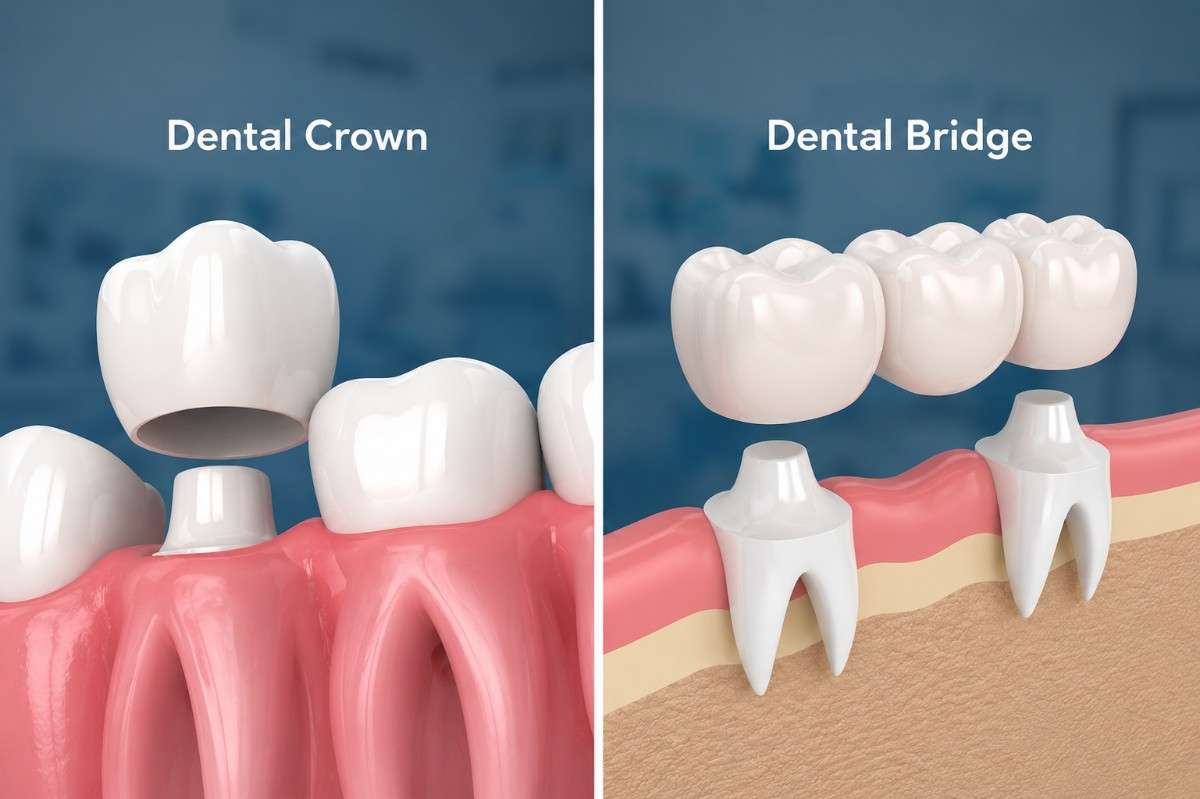
1. Protection Against Fracture
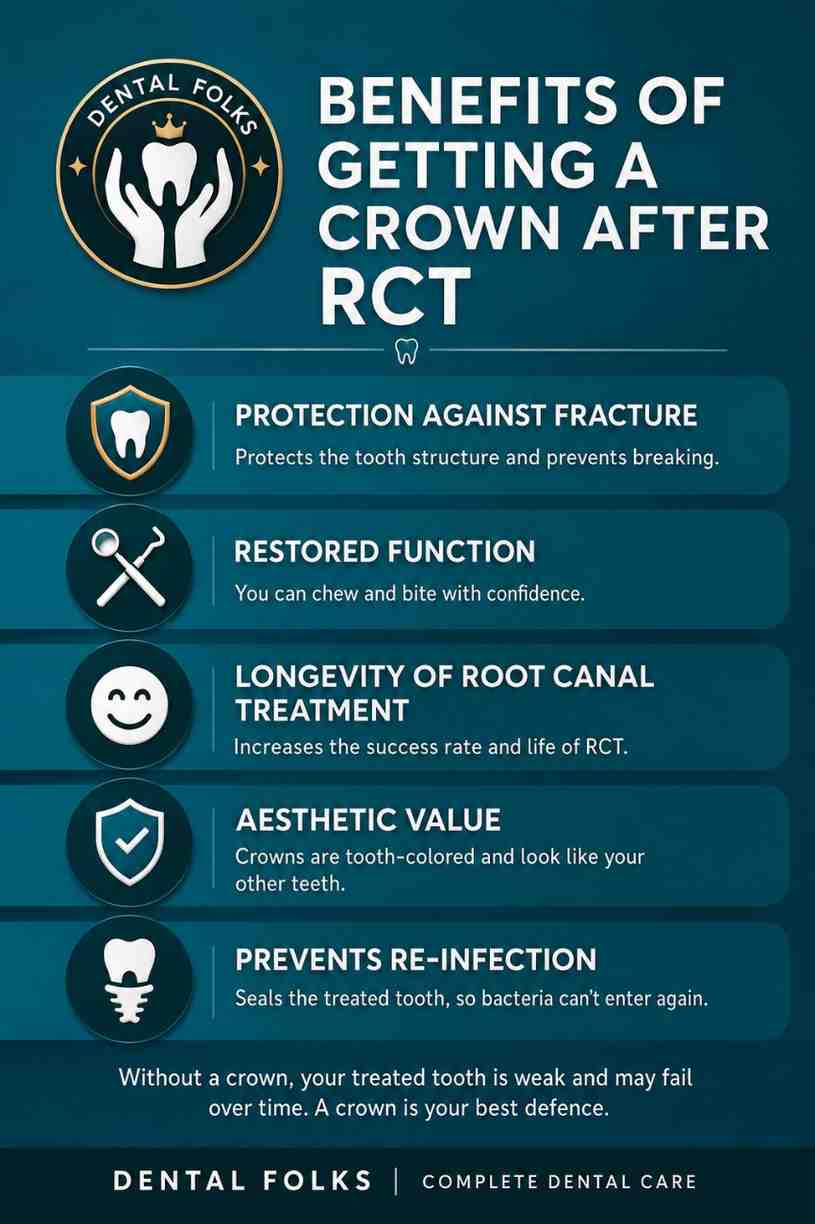
Dental crowns protect the weakened teeth from fracture after a root canal treatment.
Posterior teeth (molars and premolars) endure strong chewing forces daily. After a root canal, these teeth are significantly more vulnerable to cracking under pressure. A dental crown acts as a protective cap that covers the entire visible portion of the tooth, distributing chewing forces evenly and preventing structural damage.
Without a crown, the treated tooth may eventually fracture, potentially leading to extraction.
2. Restoring Strength and Function
A root canal removes infection, but it does not fully restore the tooth's strength. The remaining structure may be thin or fragile.
A dental crown restores the tooth's original shape and function. Once placed, the crown allows you to chew, bite, and speak normally without worrying about damaging the treated tooth.
This is especially important for back teeth, which bear the brunt of chewing forces.
3. Preventing Recontamination
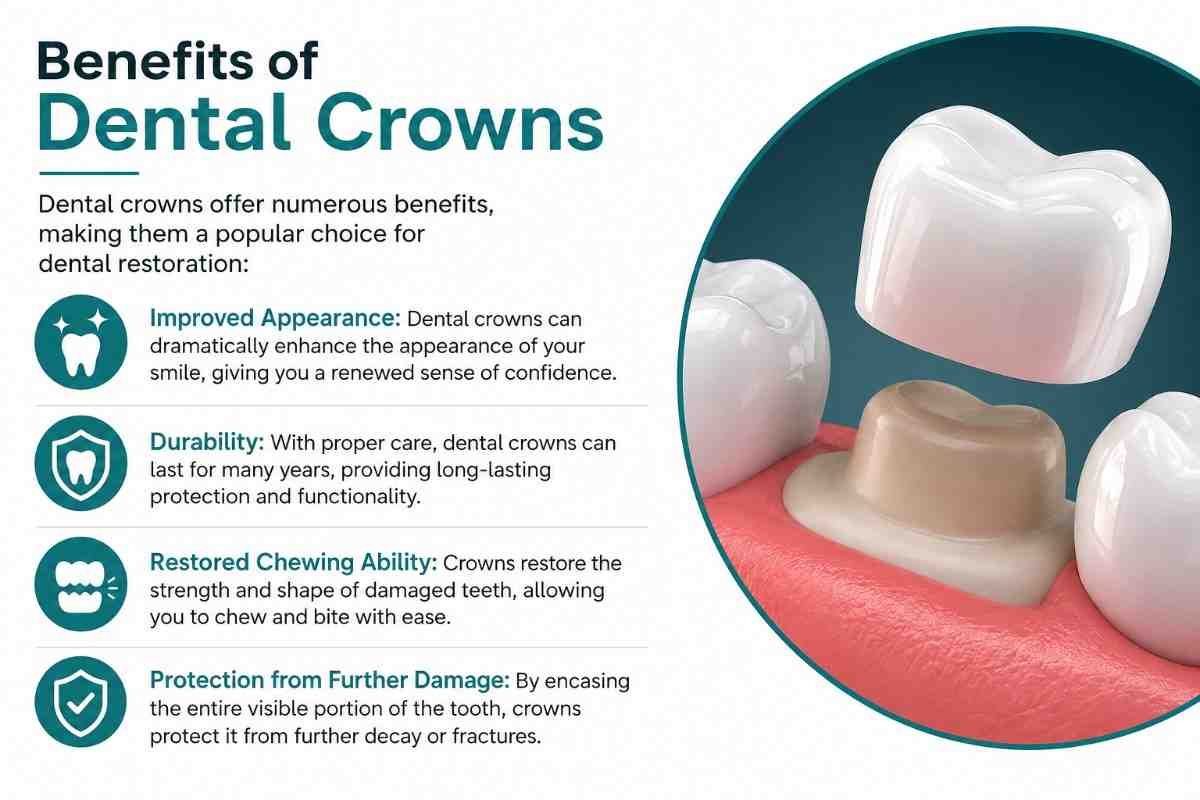
After a root canal, if the outer structure of the tooth is not adequately protected, bacteria can re-enter through the cracks, fractures, or failing fillings.
A well-fitted dental crown provides a tight seal over the treated tooth, minimizing the risk of reinfection. By preventing bacteria from penetrating the tooth, the crown plays a crucial role in ensuring the long-term success of the root canal treatment.
Recently had a root canal? Ask us about crown options at Dental Folks, Ramesh Nagar.
Call Now WhatsApp4. Improving Aesthetics
Root canal treated tooth can sometimes become discolored over time. This is particularly noticeable in front teeth.
Dental crowns are custom-made to match the color, shape and size of the surrounding teeth. Materials such as porcelain or ceramic can closely mimic the appearance of natural enamel.
For patients concerned about cosmetic outcomes, a crown provides both functional and aesthetic benefits.
5. Long-Term Cost-Effectiveness
If a treated tooth fractures or becomes reinfected, more complex procedures may be required, such as retreatment, extraction or even dental implants or bridges. These options are typically more costly and time-consuming.
Investing in a crown shortly after a root canal significantly increases the lifespan of the treated tooth, making it a cost-effective decision in the long run.
6. When Is a Crown Necessary?
In most cases involving molars and premolars, a crown is strongly recommended. These teeth endure heavy chewing pressure and are at higher risk of fracture.
For front teeth (incisors and canines), the need for a crown depends on how much natural tooth structure remains. If the tooth is largely intact and structurally sound, a filling may suffice.
It depends on factors such as: the location of the tooth, the amount of remaining tooth structure, bite force, and cosmetic considerations.
7. Timing Matters
Delaying crown placement increases the risk of tooth fracture or reinfection.
8. Types of Dental Crowns
- Porcelain or ceramic (ideal for front teeth)
- Porcelain-fused-to-metal
- Metal alloys
- Zirconia
Each material has its own advantages in terms of strength, durability and aesthetic.
A root canal treatment saves natural teeth by removing infection and relieving pain. However, the procedure leaves the tooth structurally weaken than before. A crown is not just an optional add-on it is a critical step in protecting and preserving the treated tooth. By restoring strength, preventing fractures, improving appearance, and reducing the risk of reinfection, a dental crown ensures the long-term success of root canal therapy.
Frequently Asked Questions
Do all wisdom teeth need to be removed?
Dental hygiene is essential because it helps prevent oral disease such as cavities and gum diseases and contributes to overall health.
How often should a person visit the dentist?
No. If wisdom teeth are healthy, fully erupted, and not causing problems, they may not need removal.
Are sutures painful?
Placing sutures is not painful because the area is numbed with anesthesia. Mild discomfort or tightness may be felt under the procedure.
When are sutures removed?
Non-absorbable sutures are usually removed within 7-10 days after the procedure.
Is bleeding normal after sutures?
Mild bleeding or oozing is normal during the first 24 hours.
Can sutures get infected?
Infection is rare but can occur if proper oral hygiene is not maintained. Signs include increased pain, swelling, pus or fever.
Do sutures affect eating or speaking?
Initially, one may feel slight tightness, but sutures usually do not significantly affect eating or speaking, soft foods are recommended during healing.
Are sutures always necessary after dental procedures?
No. Not all dental procedures need sutures. Sutures are only used when required to support healing and protect the surgical area.
Concerned About Tea or Coffee Stains?
If your teeth are stained or sensitive due to tea and coffee, visit Dental Folks – a trusted dental clinic in Ramesh Nagar, West Delhi.
Book Your Appointment Today