Types of dental crowns and their indications
- Protect a weakened tooth from further damage.
- Restore tooth shape, size and function.
- Improve aesthetic for discoloured teeth.
- Support teeth after root canal treatment.
A dental crown is a cap-like restoration that fully encases a tooth above the gum line.
Its primary purposes are to:
Crowns are widely used in both restorative and cosmetic dentistry.
Types of dental crowns-
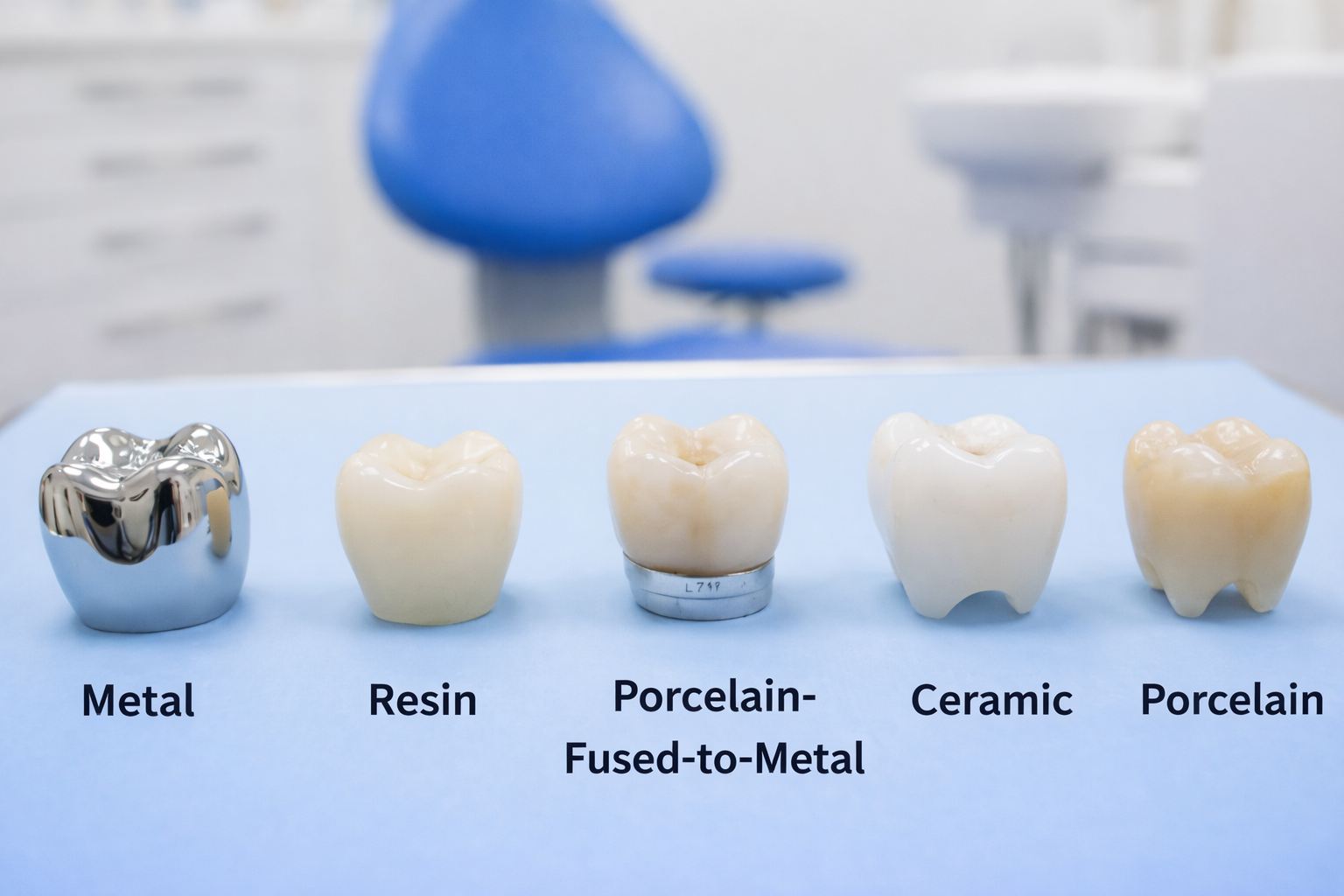
Metal crowns
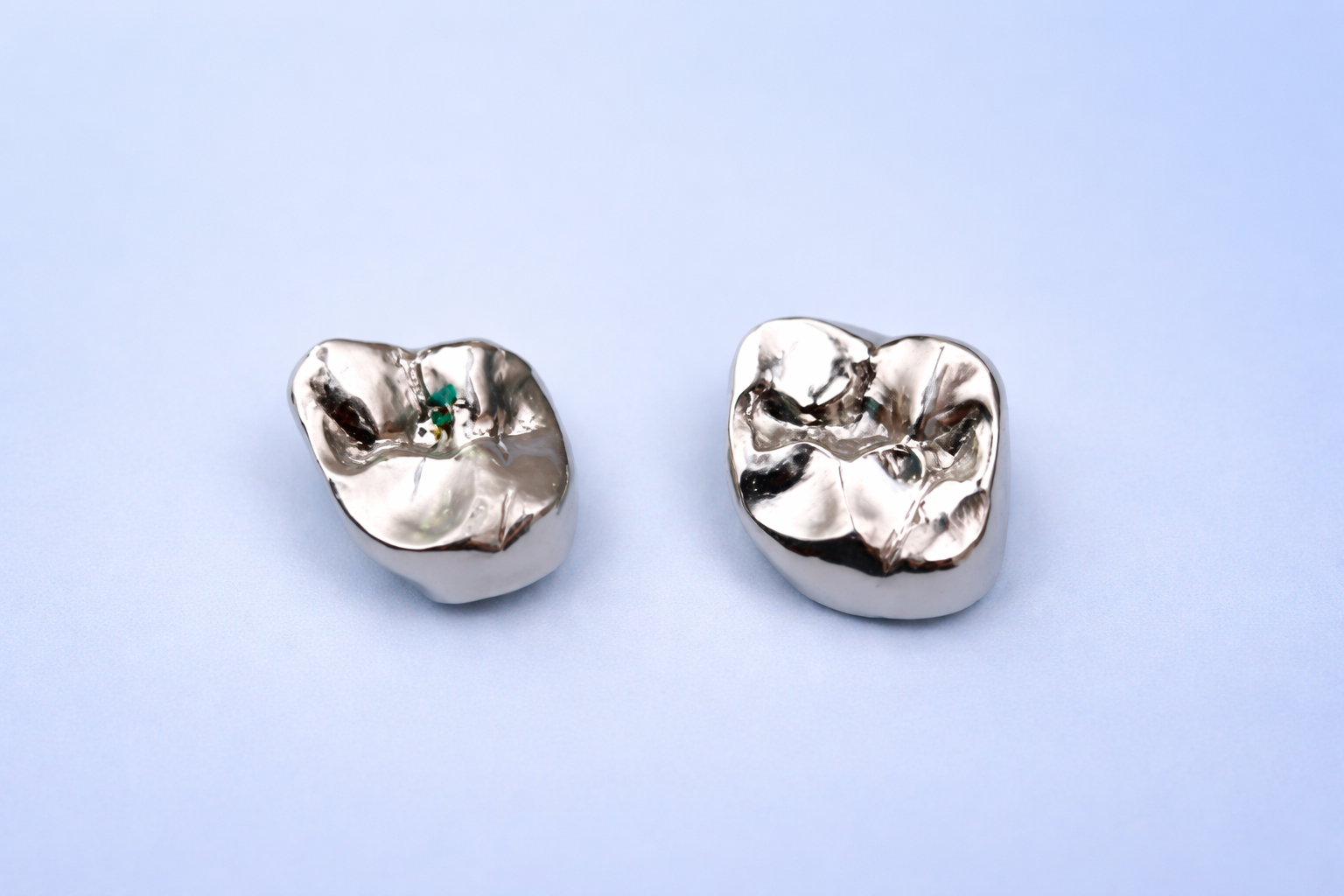
Metal crowns are typically made from gold, palladium, nickel or chromium alloys. They are highly durable (longlasting) and resistant to wear
Advantage
- Extremely strong and long-lasting.
- Require minimal removal of tooth structure.
- Ideal for patients who grind their teeth.
- Long lifespan.
- Easy to maintain.
- Biocompatible (noble metals).
- Best suited for back teeth (posterior teeth).
Indications-
- Posterior teeth (molars) where strength is more important than aesthetics.
- Patients with heavy biting forces.
- Teeth that require long-term durability and minimal maintenance.
Limitations
- Metallic appearance makes them less ideal for visible front teeth.
- Metal conducts heat and cold, potentially causing sensitivity or discomfort.
- The hardness of metal can wear down opposing natural teeth.
- Metal crowns can interfere with MRI scans or security scanners.
Porcelain-fused-to-metal (PFM) crowns
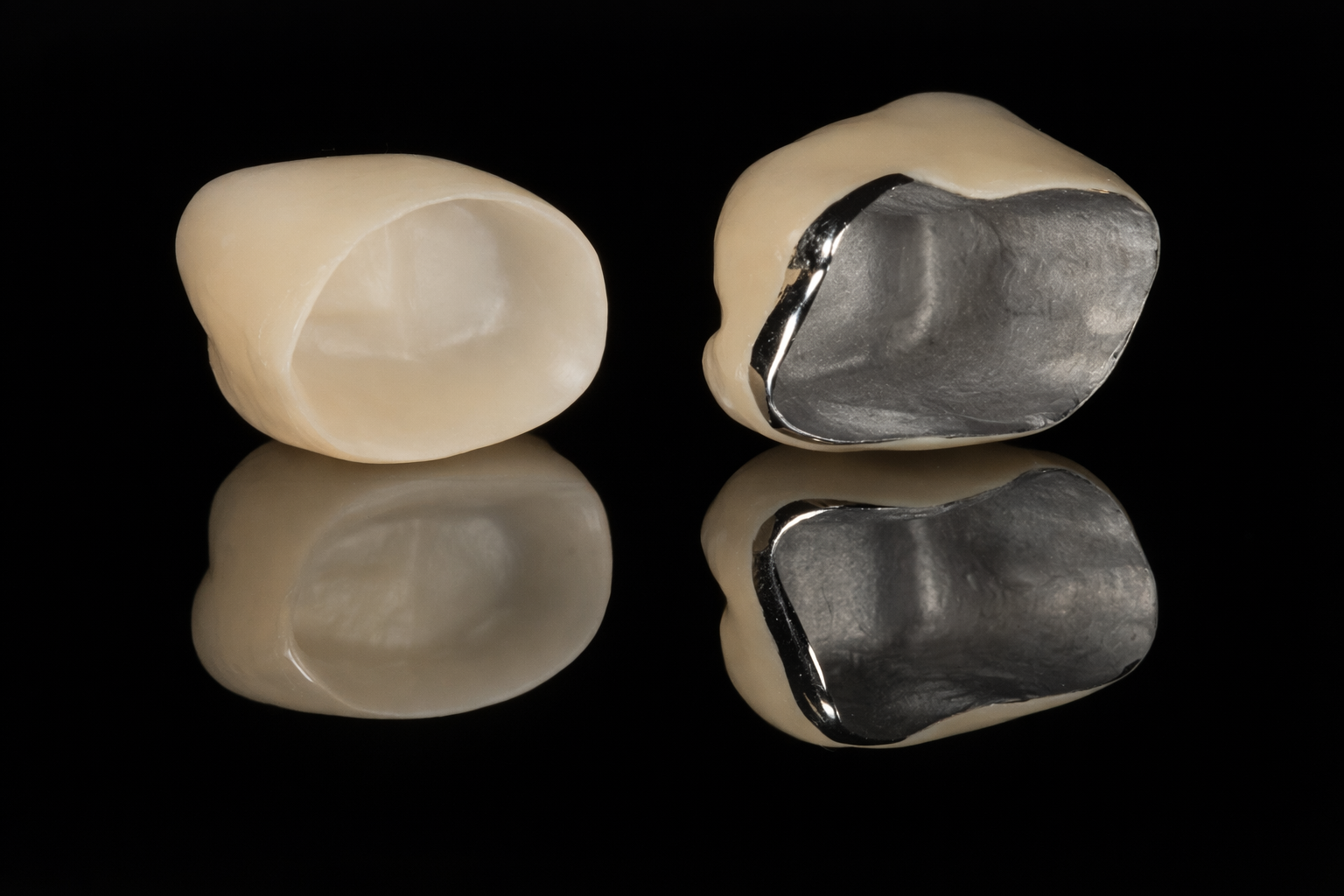
PFM crowns have a metal core covered with a layer of porcelain to mimic the natural colour of teeth.
Advantage
- Combines strength of metal with the aesthetics of porcelain.
- Can match the colour of surrounding teeth.
- Suitable for both front and back teeth.
- Shields weak or root-canal treated teeth from further damage.
Indications-
- Both anterior and posterior teeth.
- Teeth requiring strength with moderate aesthetics.
- Bridge abutments.
- Root canal treated teeth.
Disadvantage
- Possible porcelain chipping.
- Metal margin may become visible overtime.
- Less translucent than all-ceramic crowns.
All-ceramic or All-porcelain crowns
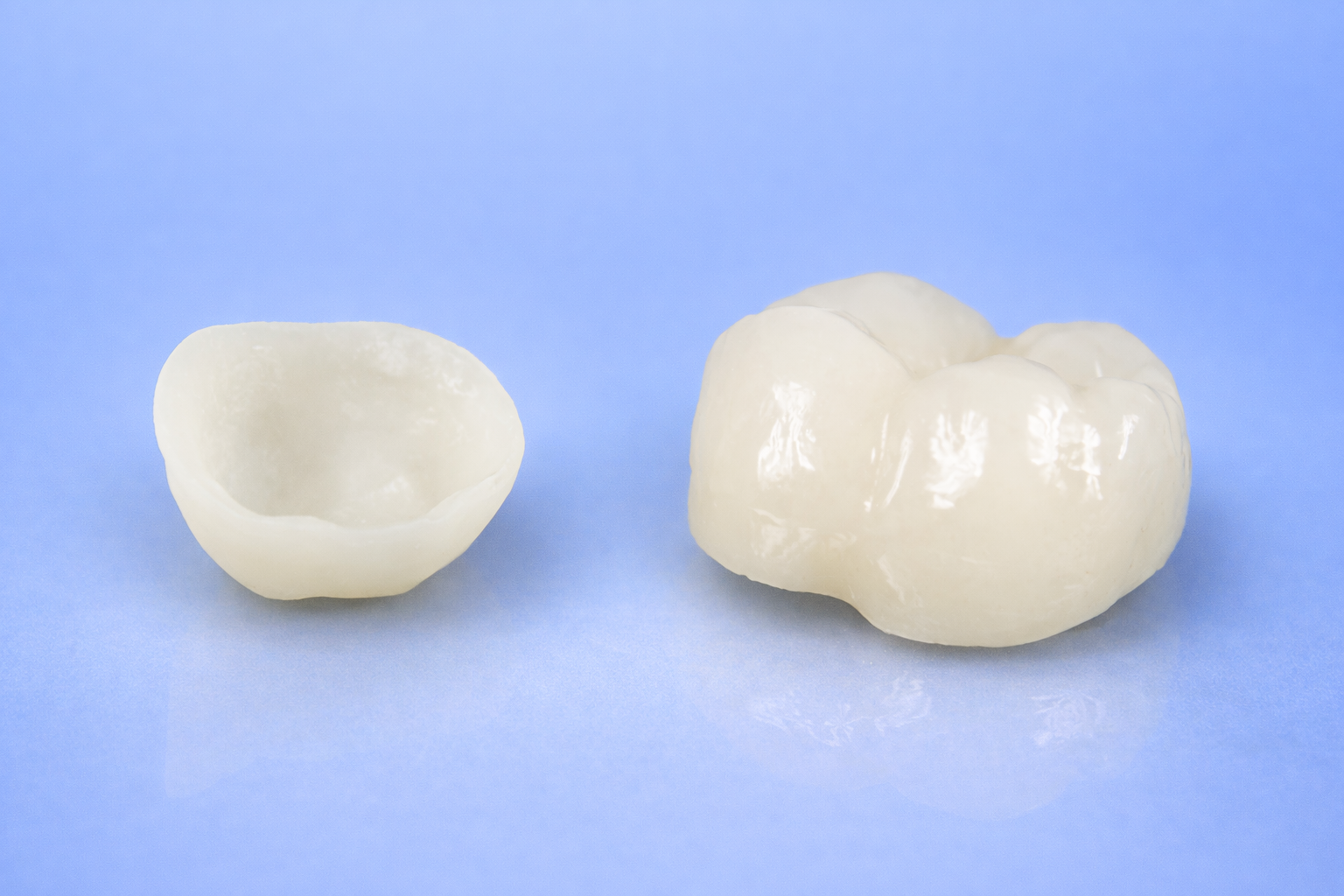
All-ceramic crowns offer superior aesthetics and closely resemble natural teeth in translucency and colour. They are metal-free, making them ideal for patients with metal allergies.
Indications
- Anterior teeth.
- Patients with high aesthetic demand.
- Metal-sensitive individuals.
Advantage
- Excellent aesthetics.
- No dark metal margins.
- Biocompatible.
Disadvantage
- Less fracture resistance than metal in some cases.
- Require precise preparation and bonding.
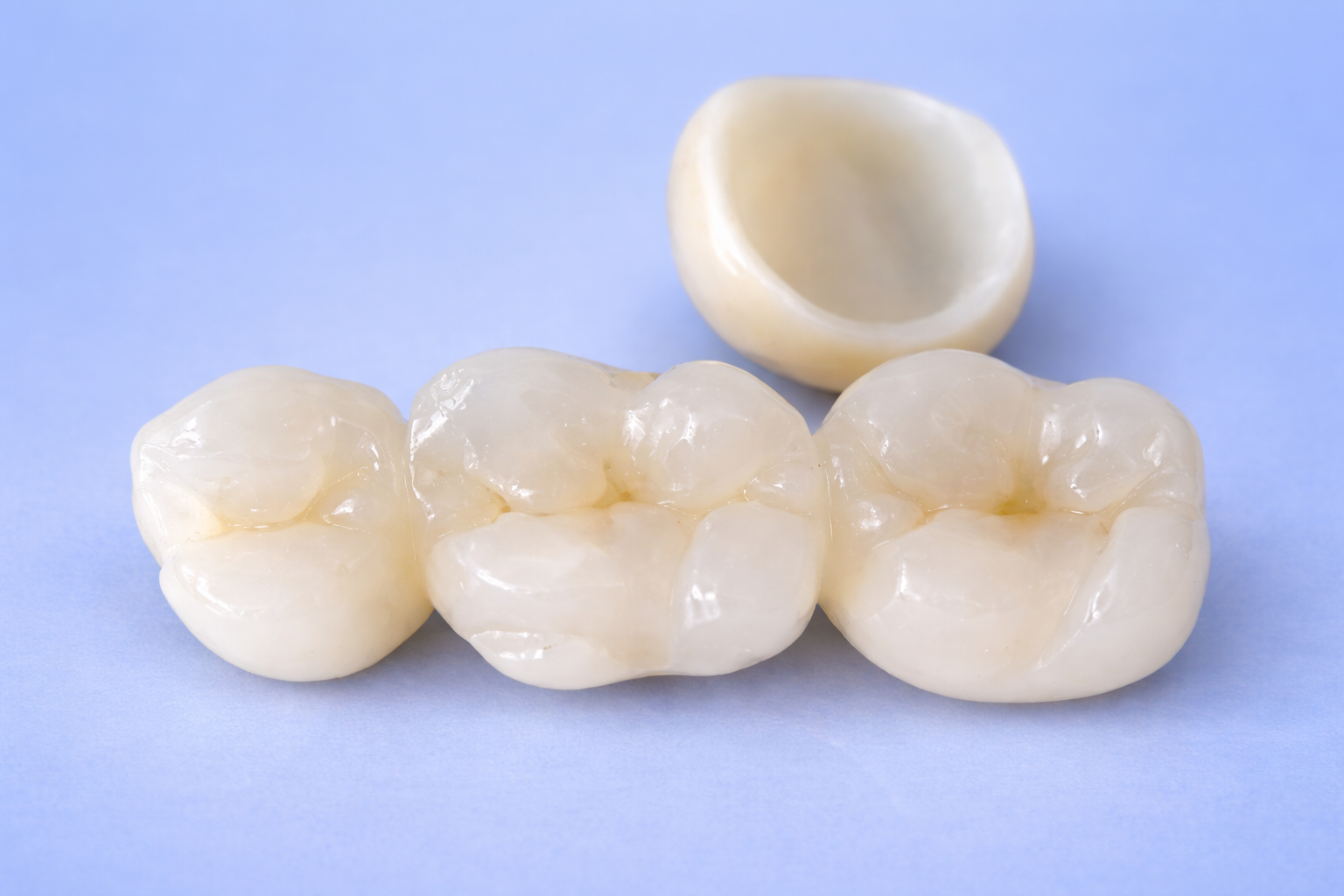
Zirconia crowns
Zirconia crowns are among the strongest ceramic crown available. They combine high fracture resistance with improved aesthetics, especially in newer translucent zirconia formulations.
Indications
- Posterior teeth requiring high strength.
- Patients with bruxism.
- Implant-supported crowns.
- Cases needing durability and reasonable aesthetics.
- Requires less removal of natural tooth structure.
Advantage
- Extremely strong and durable.
- Metal-free.
- Minimal wear on opposing teeth.
- Resists food staining.
Disdvantage
- Slightly less translucent than porcelain.
- Shade matching can be challenging in anterior cases.
Resin crowns [temporary crowns]
Resin crown is less expensive and typically used as temporary or short-term restorations. They are easier to fabricate [ made] but less durable than other crown type.
Indications
- Temporary crowns
- Paediatric dentistry
- Short-term restorative needs
Advantage
- Cost- effective
- Quick fabrication
Disdvantage
- Prone to wear and fracture
- Short lifespan
- Limited aesthetic stability
Common reasons for crown
- Extensive tooth decay
- Fractured or cracked teeth
- Following root canal treatment
- Worn-down teeth (attrition or erosion)
- Cosmetic correction of shape or colour
- Support for dental bridges
- Coverage of dental implants
Choosing the right crown
- Location of tooth
- Aesthetic requirements
- Amount of remaining tooth structure
- Occlusal forces
- Patient’s oral habits
- Cost considerations
It depends on several factors
Frequently Asked Questions
Concerned about your dental health?
If you are experiencing tooth pain, sensitivity, bleeding gums, stains, or other dental problems, visit Dental Folks – a trusted dental clinic in Ramesh Nagar, West Delhi.
Book Your Appointment Today